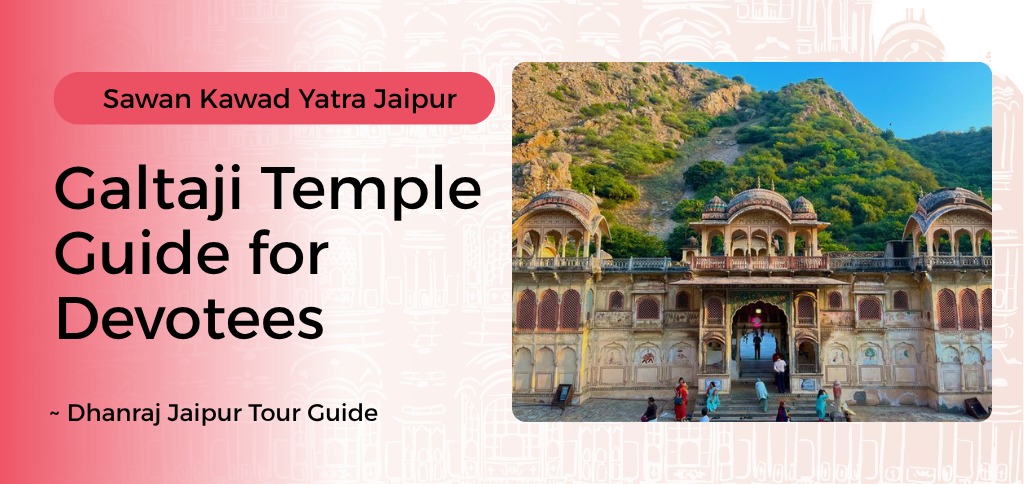
Sawan 2026 begins on 30 July. For the next few weeks, Jaipur’s temples come alive. One of the best stops during this period is Galtaji Temple. It’s a centuries-old temple complex tucked into a rocky gorge just outside the Pink City. You don’t need to be here for the Kawad Yatra season to enjoy it. Galtaji Temple offers striking architecture, natural spring-fed water tanks, and hundreds of resident monkeys. Locals call it Jaipur’s “Monkey Temple” for good reason.
This guide covers everything a first-time visitor needs to know. We’ll look at the history of Galtaji Temple, why it matters during Sawan Kawad Yatra, and how to fit it into your Jaipur sightseeing plan.
What Is Galtaji Temple?
Galtaji Temple sits about 10 km east of Jaipur. It’s built into a narrow valley in the Aravalli hills. According to local legend, the sage Galav meditated here for years. His devotion earned a natural spring that still feeds the temple’s water tanks today. Diwan Rao Kriparam, a courtier of Sawai Jai Singh II, built the current structures in the 18th century. Many believe the site itself served as a place of worship long before that.
The complex holds seven sacred water tanks, called kunds. The most important one is the Galta Kund. Carved cow-mouth (gomukh) spouts feed it with spring water. A Sun Temple with commanding city views sits alongside the main shrines, along with several smaller shrines. Visitors often pair a trip to Galtaji Temple with Hanuman worship. That’s also why locals treat the resident rhesus macaques and langurs with reverence rather than seeing them as a nuisance.
Why Galtaji Temple Matters During Sawan Kawad Yatra
The Kawad Yatra is one of India’s largest annual pilgrimages. Devotees, called Kanwariyas, travel to collect sacred water and carry it back to a Shiva shrine. The pilgrimage typically ends around Sawan Shivratri. In Jaipur, several local temple routes see a similar rise in visitors through the Sawan month. Galtaji Temple, with its spring-fed kunds and Shiva association, becomes a natural stop for anyone marking the season, even informally.
For a traveler rather than a pilgrim, this is one of the best reasons to visit during Sawan. The atmosphere shifts noticeably. More visitors arrive. Small stalls selling prasad and flowers pop up near the entrance. The temple’s courtyards feel far more alive than during an ordinary weekday visit at other times of year.
Best Time to Visit Galtaji Temple This Sawan
Galtaji Temple generally stays open from early morning until early evening. The best time to visit is right after sunrise. You’ll beat the heat and see the temple before the crowds build up. During Sawan, weekends and the days closest to Sawan Shivratri (11 August 2026) tend to draw the biggest crowds. A weekday morning visit strikes a good balance if you want a relaxed pace while still soaking in the festive atmosphere.
Monsoon showers are common through this period. Carry a light rain cover and wear shoes with good grip. Several sections around the kunds involve stone steps, and they get slippery when wet.
What to See Inside Galtaji Temple
- Galta Kund – the main water tank. Locals believe it never runs dry, even in peak summer, and consider it the most sacred of the seven kunds.
- The Sun Temple (Surya Mandir) – reach it via a short climb. It offers one of the best panoramic views of Jaipur city and the surrounding hills.
- Shrines to Krishna and Hanuman – smaller temples within the complex. Each one carries its own carved details worth slowing down for.
- The resident monkey troops – a mix of rhesus macaques and langurs live throughout the complex. That’s why locals often call it the Monkey Temple rather than by its formal name.
How to Reach Galtaji Temple from Jaipur City
You can reach Galtaji Temple easily from central Jaipur by taxi or auto-rickshaw. The drive takes around 20-30 minutes, depending on traffic. Coming from the City Palace or Hawa Mahal area? The route takes you past Surya Mandir on the way up. It’s worth a quick stop for the view alone. No direct public bus runs all the way to the temple gate. A private taxi, an app-based cab, or a guided tour remains the most convenient option for most visitors. This matters even more during the busier Sawan weeks, when parking near the entrance fills up fast.
Other Places to Combine With a Galtaji Temple Visit
Galtaji sits slightly outside the main city, so it pairs well with a half-day route rather than a standalone trip. Many travellers combine it with the nearby Sisodia Rani Garden. Others fold it into a broader day covering the top sightseeing places in Jaipur. Interested specifically in temples? Our earlier post on famous temples in Jaipur you shouldn’t miss covers several other sites worth adding to the same itinerary.
Planning your visit specifically around Sawan? Check our guide on Jaipur’s best sightseeing destinations by season. It covers how the monsoon months change the sightseeing plan across the city, not just at Galtaji.
Travel Tips for Visiting Galtaji Temple During Sawan
- Keep food out of sight near the monkey troops. They’re used to visitors and will approach quickly if they spot something edible.
- Remove your footwear before entering the inner shrine areas. This is standard practice at most Hindu temples in Rajasthan.
- Carry small change for prasad and donations. Card payments remain uncommon at the smaller stalls near the entrance.
- Check the weather before heading out. Sawan showers can make the stone steps around the kunds slippery.
- Go early on weekends. The temple gets noticeably busier by mid-morning during the Kawad Yatra weeks, according to reports on this year’s Sawan and Kawad Yatra dates.
Why a Local Guide Helps for a Galtaji Temple Visit
Galtaji Temple doesn’t offer the same signage and visitor infrastructure as Amber Fort or City Palace. A bit of local context goes a long way here. A guide can tell you which shrine to visit first, explain the significance of each kund, and help you navigate the narrow gorge safely during a busier Sawan weekend. A local guide can also fold the temple into a wider half-day route, so the visit doesn’t feel like a disconnected stop in your Jaipur trip.
At Dhanraj Jaipur Tour Guide, we build Galtaji Temple into half-day or full-day sightseeing plans. We can combine it with the City Palace, Amber Fort, or one of the local bazaars covered in our other travel guides, depending on what else is on your list.
Entry Fee and Timings for Galtaji Temple
The main Galtaji Temple complex charges no entry fee. A small parking charge usually applies for cars and two-wheelers near the entrance. The temple generally stays accessible from around 5 AM to 8 PM. The main shrine areas and prasad counters stay busiest between 6 AM and 6 PM. Photography is allowed in most outdoor areas of the complex. Just ask before photographing anyone performing rituals at the kunds, out of basic courtesy. During the Sawan weeks, expect extra flower and prasad stalls lining the entrance lane. They add a nice bit of local colour, even if you’re visiting purely as a sightseer.
Final Thoughts
Sawan brings a different energy to Jaipur’s temples. Galtaji Temple is one of the best places to experience that, and you don’t need to join the Kawad Yatra pilgrimage to enjoy it. Between the natural spring-fed kunds, the hilltop Sun Temple views, and the resident monkey troops, this stop rewards an unhurried morning far more than a rushed ten-minute visit. Visiting Jaipur any time between late July and mid-August 2026? Set aside a few hours for it.
Planning a Jaipur itinerary around Sawan this year? Get in touch with Dhanraj Jaipur Tour Guide and we’ll help you build a route that includes Galtaji Temple along with the rest of the city’s must-see spots.